Sep 14 2026

A Test Ride with RideALSO’s TM-B

“Holy shit, that’s fast.”

The red light had just turned green and I press on the throttle with my thumb. Instantly I am thrust forward, and I hit 20mph in three seconds.

If ALSO could only demo a single thing about the bike, that’d be the feature to sell me on. I’m guilty of gliding past so many a yellow light when biking, because when you stop at a red light you lose all your momentum. You’re stuck shifting down, maybe adjusting the pedal assist level, and then slowly lurching forward once the light is green again.

As I passed by another test rider who had just tried the same thing with the throttle I heard him exclaim “fucking hell!”

But this bike is more than its ludicrously fast acceleration that goes from 0–20 in 3 seconds, fast enough to make you think you’re about to do a wheelie (which a representative assured me won’t happen because the front wheels detect being off the ground which will cut power to the motor).

ALSO started its life at Rivian before it got spun off into its own independent company, and you can see Rivian’s DNA all over this bike, from the shape of its headlight, to the sound design of its electronic bell, to the fact that they use Rivian EV battery cells to power the bike’s drivetrain.

And coming off the pandemic years when it seemed like the market was flooded with e-bikes and e-bike companies (of which many no longer exist, including my beloved DOST), ALSO is here trying something completely new.

A TM-B in all its glory

The TM-B is nominally a bike-shaped bike. But if you look closer, almost everything about it is custom, and the most custom part of this bike is its drivetrain system.

With every other bike and ebike, your pedals are mechanically connected to the wheels, sometimes directly, and sometimes through a series of gears and other mechanical contrivances. The TM-B is different. When you pedal the TM-B, you feed power into a generator, and that generator (plus the battery) powers a separate motor that actually propels the bike.

This is super cool, because the amount of energy it takes to pedal is constant, whether you are on flat terrain or on a steep hill. It doesn’t feel fake like an exercise bike either; it just feels like you’re riding a bike. The resistance grows as you push harder, and the bike moves faster. It’s an incredible feeling.

I’m quite enamored with the cool things ALSO did with the custom design of this bike too (another general characteristic I love about Rivian’s EVs). Everything is super tightly integrated. You have built-in lights (and turn signals), as well as an electronic bell. There is a nice looking color center screen that displays surprisingly well even in bright daylight. The seats are interchangeable, and you have a few different options including a bench seat, a cargo setup, and a plain old bike seat.

The bike takes a little getting used to, though. I test rode one with standard handlebars (which provide a more upright experience) and I still felt like the handlebars were low for my taste as a 6’2" rider. I feel like I’m leaning way more forward than I do on my current bike. The crank length is also shorter than what I’m accustomed to, and it made the pedaling motion seem a bit shallower. The handlebars are not able to be changed in height, but allegedly the crank could be changed as it uses standard parts (according to a post I saw on a forum). It wasn’t uncomfortable, just different, like I was getting into a smaller sports car. When my ride was over and I got back on my own bike to ride home it felt like being back with an old friend. It almost gave me pause about my preorder, but then as soon as I had to stop at a red light with my existing bike and then get going again, I realized I’ve been ruined. I don’t plan to get rid of my current bike anyway, so if I ever am craving a comfy ride on a big framed bike, I can just hop on the old one. But I have a feeling I won’t do that often.


As the owner of a bike made by a company that has gone under, I realize I’m taking an even bigger risk with the TM-B. My DOST Kope is made with largely off-the-shelf components and my local bike shop has never balked at servicing it. But the TM-B is a whole other ballgame, and if they go under then I’m at the mercy of the longevity of most of the bike.

But I’m hoping it doesn’t come to this, and I am optimistic it won’t, because this bike feels like something entirely new.

As I was riding home today, I was trying to think of an apt comparison. If a standard bike is like a gas-powered car, and traditional pedal-assist e-bikes are like a plug-in hybrid car, then the TM-B feels like a proper EV. It’s a glimpse at a reimagining of what bikes can be. It’s the kind of bike that you could show an open-minded person who has never thought it possible to commute by bike and they could be convinced to take the leap. This bike’s drive system feels well-suited to last mile commercial delivery as well, and with the right attached equipment could probably be sold as-is to delivery companies.

If you’re a bike enthusiast and you love bikes for the limits they currently have, it’s a toss up whether you’re going to ride a TM-B and like it. But if you’re not a biker at all right now, this is the bike that could make a bike enthusiast out of you, and I love that about it.


Sep 5 2026

We’re back after the hack!

About a week ago someone finally noticed the 18 year old vestigial PHP apps that were sitting in my shared hosting server and decided to turn icanthaszheezburger into a zombie site.

I think I’ve got everything back in order again now.

If anything still seems off, let me know.


Sep 5 2026

The vibes are still off in tech

I gave a talk last year at XO Ruby about how it’s felt like the vibes have been off in tech for some time.

I feel differently about the overall tech industry vibes a year-ish later, but one thing has gotten decidedly worse: fascists remain way too comfortable and powerful in tech.

Case in point: DHH has developed this annoying habit of going on increasingly racist tirades on X and his blog, complaining a lot recently that there are too many non-white people in Europe. It’s transparent white supremacist bullshit, and people take notice.

But not enough people notice. Recently, he went on a press tour for his new Linux distro, and my YouTube feed has been filled with videos of dudes (because of course it’s all dudes) credibly reviewing it and singing its praises as an OS while completely ignoring the racist bullshit DHH is spewing on the regular.

And it gets even more discouraging because DHH has managed to secure over $12 million in funding from a bunch of other tech buddies including the CEOs of Shopify and Stripe, and 1Password also decided to throw a six figure sum into the mix.

DHH was already independently wealthy before this, and there are hundreds of other open source projects that are way more load-bearing to modern tech infrastructure what are way less fascist who could have used that $12MM more. But these contributions weren’t actually about helping a fledgling software project; they were rich, powerful racist dudes in tech propping up their even more racist buddy.

This pattern is absolutely not isolated to tech, but the tech world is my home, and that feels like more of an affront. In many ways tech and the internet are my home in a deeper and more existential way than any physical place is my home. And for much of my adult life the industry has grappled with these issues in the open and for awhile I felt like they made decent progress.

But that progress has been blown apart in recent years. I’m sick of seeing my home become overrun with far-right crackpots.

I’m sick of seeing the bad guys winning.

On a deeper level, I’m frustrated that the far-right is so well organized while we aren’t. They are rich and well-connected. If you are in law school there’s a Federalist Society chapter, ready to groom the next generation of lawyers to become judges SCOTUS justices and authors of Project 2025. They’re super methodical, spending decades stacking the deck in their favor, and they can do it because they have the resources and the ability to be patient.

But everything the right is doing and pushing for is broadly unpopular, and that weirdly gives me optimism.

It takes a massive and expensive machine of propaganda and pushing on the fairness of elections themselves to keep the far right in power because every policy they make really obviously sucks, is wildly unpopular, and makes life visibly worse for people. It requires that the rich spend tens of billions literally owning the social networks we communicate on so that they can tip the scales in favor of their causes.

And the more unpopular the right’s platform becomes, the more money it takes to keep that afloat.

So even though the bad guys are catching mad Ws right now, it can’t last forever.

The tech industry has a lot of DHHs unfortunately. But I think it has more non-DHHs, and I think it has more conscientious people who think and care deeply about the specific corners of the world they are committed to making a better place. I’m trying to do that too, in my own little weird ways.

For my own spirit, I need y’all to start being louder. You don’t have to spout your anger (but you can if it helps you feel better). I just want to hear about what you care about so I can celebrate that y’all exist and care about those things.


Jul 9 2026

DIYing the TRMNL Without Giving TRMNL Money

The TRMNL is this cool programmable eInk screen that is connected to Wi-Fi and can display pretty much anything you like (and there are tons of fun things it can display thanks to a big ecosystem of plugins).

As a nerd, that sounds fun. I was even more intrigued when I learned its business model is pretty neat too. No subscriptions, a very open API, and basically all the components are open-source.

I’ve had my eye on blowing some money on one until last summer when their CEO started running his mouth on Twitter with a bunch of anti-LGBT bullshit.

Earlier this year Amazon decided that they were going to drop support for a bunch of older Kindles. I figured that would be a great opportunity to save an old Kindle from being e-waste by turning it into a makeshift TRMNL.

First, a disclaimer: Even though I’m not giving TRMNL any money, I am still using their open-source software for this project. I’m using their client for the Kindle, and I’m using their Terminus open-source server. In that sense, I’m still supporting TRMNL by using (and also talking about) their stuff. For me, it felt like an okay balance to use it without financially supporting them. If that’s getting too chummy with TRMNL for your taste, I’ll explain alternatives below.

The pieces

When you buy an off-the-shelf TRMNL, it’s a complete product and you can just follow the happy path because it’s a TRMNL device running TRMNL firmware, talking to TRMNL’s cloud, and you configure it using TRMNL’s web app.

However, TRMNL’s target audience are nerds and they allow you to DIY some or all of this process. You can, for instance, choose not to use TRMNL’s servers and point your device at your own server (this is called BYOS, or Bring Your Own Server). Or, you can bring your own non-TRMNL device (this is called BYOD). You can do both! And each step along the way you can choose to use software made by TRMNL or someone else in the community.

Let me run you through the components I’m using:

  • A Kindle 4th generation, jailbroken so that I can install other software on it
  • KUAL, an application launcher for jailbroken Kindles. The jailbroken Kindle still boots into a standard Kindle library interface, so you first open KUAL.
  • KOReader, an alternative e-reader app that runs on a jailbroken Kindle
  • TRMNL plugin for KOReader, which basically polls a server periodically and displays a PNG that the server sends back to it.
  • Terminus server, TRMNL’s open-source implementation of a server that powers TRMNL devices
  • AGNDA, a TRMNL plugin I custom made that leverages a separate Python server that connects to my Google Calendars and grabs calendar data for display

Jailbreaking the Kindle

This was the biggest fucking pain in the ass because I waited until after Amazon dropped support to do the jailbreak. Most modern Kindle jailbreaks involve a hack to the Kindle Store app, but because mine won’t even talk to the store in the first place, that approach was dead in the water. If you take the unsupported Kindle route, do it because it was dirt cheap.

After trying a bunch of alternatives, I found a really detailed Reddit post outlining how to do this. Yes, you literally have to update firmware versions one at a time to get it up to the version where it will handle the jailbreak. I also remember getting stuck at one point where it was booting into a separate UI but the jailbreak wasn’t finishing installing. I was trying a bunch of stuff and didn’t take notes but eventually I improvised my way into getting the Kindle to the point where it said it was jailbreaking!

me holding a gen 4 Amazon Kindle whose screen indicates it's currently being jailbroken

After that, I got KOReader installed. For ease, I tried a two week trial of a real TRMNL license to just connect the device straight to that to make sure I had the Kindle configured right.

After this, I discovered that Aliexpress has a clone TRMNL device that cost $10 more than what I paid for this Kindle, which I will probably do next time. But if you have access to cheap Kindles, this works well.

Server setup

Getting the Terminus server set up is more involved than your average setup process. This is more like LEGO pieces you have to assemble than a nice setup wizard that walks you through the process. A few concepts:

  • There’s a Device manager, and you’ll want to add a device to represent the Kindle. I had to modify the Kindle’s KOReader plugin to have it send along the devices’ MAC address when it made requests to the server so the server would know it matched up
  • Extensions are plugins that render screens. A plugin works by fetching data from some source, and then it renders that data using a template language called Liquid, which is kind of a markup language.
  • A screen is a representation of what can show up on a TRMNL’s physical screen at a given time. Screens can be static images too!
  • Playlists are what you use to decide what screen(s) will appear on your TRMNL. If you have a small device, you might want to rotate between displaying different things, or have a schedule that determines what time of day certain things are shown.

AGNDA

You get access to community-created plugins right from the Terminus server, but you don’t get access to official ones like their Google Calendar plugin. When I was trying out the official TRMNL servers I tried their version of the Google Calendar plugin and it wasn’t that great.

So I made my own.

My version looks much nicer and it works automatically with calendars from both my work and personal accounts, merging into a single agenda.

Doing this with less TRMNL?

If you want to have less TRMNL in the stack, the easiest thing to swap out would be the server. Terminus is TRMNL’s officially maintained server, but there are several alternative servers including LaraPaper and https://icanthascheezburger.com/platinum-play-casino-app/ (both of thse repos are under TRMNL’s GitHub org but appear not to be maintained directly by TRMNL at first glance).

For alternative client software, you might be on your own here. But if you’re already thinking about breaking free from using TRMNL you can build your own custom client and server that doesn’t behave like a TRMNL at all.

Conceptually the device isn’t complicated; it polls a server which responds with a rendered PNG image that goes on screen. The power of using stuff compatible with TRMNL’s ecosystem is, well, the ecosystem. You can benefit from a vast library of community-made extensions right out of the box.

But if you’re cool with coding up something yourself, that’s very achievable! All you have to do is decide what you want to fill an eInk screen with.


As someone who tinkered with Linux and computers as a teenager, I learned pretty quickly that I really value when people with great taste build out proper products that are a joy to use, even when you can DIY it.

Yes, 19 year old me, you can theoretically take an old laptop and install a bunch of random software on it and literally duct tape together a digital picture frame, but you’d have been way better off just buying one off the shelf that’s made for that purpose. I got older and wiser and realized the value in that.

But also as I’ve gotten older and wiser, I’ve realized that buying stuff off the shelf can’t be a solution to absolutely everything. For one thing, the off-the-shelf product might not suit your needs just right and you might be able to do better with something custom.

And more deeply, I don’t like my relationship with the world being that of a pure consumer, just dependent on others to solve my problems. It’s worth the extra struggle sometimes just to know that I can still do a thing the hard way, and feel that much more satisfied in the outcome.

And even more deeply, even if I really admire the product sensibilities TRMNL’s CEO embodies, their CEO running his mouth on Twitter with some homophobic bullshit loses them my financial support. Merely existing in today’s society involves getting pushed into moral tradeoffs constantly, but this was one thing I had control over.

I’m a little late to post (in fairness I had a draft ready in June), but happy Pride. 🏳️‍🌈🏳️‍⚧️👬


Jan 12 2026

https://icanthascheezburger.com/highest-paying-online-casino-games/

I’ve made a brand new theme!

This is my first foray into making a custom WordPress theme from scratch and I’m quite happy with the results!

I wanted to go with something kind of bold and maximalist. I had seen this sort of color block style on other sites and I thought it was really charming.

This theme is built custom from scratch and offers automatic light and dark mode support. I’m really delighted with it!


Jan 11 2026

the best french online casino

My friend runs a shop that sells and repairs mowers and other small engine equipment. For years she’s ranted to me about how lousy her dealer management software is, and on a number of occasions she’s asked “could I make something myself?”

And for years I’d tell her it’s probably not feasible, because building something new from the ground up takes several engineer-years of effort.

She’d have to own a small chain of maybe 10–20 of these shops before the economics start to potentially make more sense, and even then she wouldn’t win on price; she’d win on being able to have better software.

But we have LLMs now, and they’re really helpful at building software now (especially compared to just a year ago).

We’re not in “she can build her own DMS” territory, but she has options now that she didn’t have before.

Even without adding an engineer to the payroll, she can use LLMs to become even more of a power user. One of the first things she could start doing is gleaning more insights from her databases. LLMs are great at taking a natural language description of something you want to know, and making that into an SQL query.

She can make decisions about what inventory to order with more confidence.

She can gather really detailed data about past machine repairs and give customers a better picture of total cost of ownership that’s based on hard data and not just anecdotes.

Eventually it might make sense for her to hire an engineer part-time to help her build out simple internal apps based on opportunities she sees.

These incremental improvements add up. Her shop can serve its customers better. The team can become happier because they spend less time on busywork. She can get the shop paid faster for warranty repairs. She can go from “that’s a good idea but I don’t have the time to dig into it” to “that’s a good idea, let’s try it out” as her new default MO.

Build Vs Buy

For decades, the “build vs buy” question hasn’t even been an option for small businesses; buying off-the-shelf software is the only affordable option. Even big software companies eventually shy away from stuff built in-house as they mature because they decide that those things aren’t core competencies. When I worked at GitHub we had a number of apps built in-house that eventually became unstaffed and then replaced with off-the-shelf software that was always worse in some big ways.

Every business spends time fighting with their software trying to nudge it into working with them. You see it as a customer too; do you ever listen to that customer service agent on the phone? They’re spending 80% of the call just trying to get your information entered into the ticketing system.

As someone who’s spent his career making software I catch a glimpse of these systems all the time and I think “this could be so much better.”

With the help of LLMs, the small business has the opportunity to enjoy making nice bespoke software for themselves that’s fast and perfectly suited to just their needs.

I get strangely giddy at this idea. Everyone deserves great tools to do their best work.


Dec 30 2025

2025 In Review

Note: this is about 2025 for my life specifically. For the world at large, it continued to be a dumpster fire and I acknowledge that how my own life went and how the world went aren’t necessarily in sync.

I’m really happy with how life went for me in 2025. And that’s pretty exciting, considering that I got a nasty little surprise the week after my birthday when I learned my job had been eliminated at GitHub, presumably to burn the extra money on more Copilot stuff.

But I seriously couldn’t have asked for a better year:

  • I biked over 550 miles this year, blowing way past my goal of 375 miles.
  • I finally made a modern macOS port of my favorite Tetris clone from the 90s (I can’t really share it with the world because reasons, but it exists now and I’m happy it does).
  • I got to meet up with a childhood friend I hadn’t seen in almost 25 years.
  • I won a free ticket to the final RailsConf, where I got to meet another friend in person that I’ve known for almost 20 years. Then we road tripped back to Portland together.
  • I took another road trip to California with my boyfriend, during which time he proposed to me.
  • Then he got top surgery, for which I provided moral and logistical support.
  • I sent my resume to exactly one company and they offered me a job. And I’m having a lot of fun here!
  • I closed out the period of unemployment by getting married in a humble and intimate ceremony in our living room.
  • I finally got an electric car.
  • I gave a talk at XO Ruby Austin (it was recorded but not yet published)
  • My long-awaited kitchen remodel began after a ton of delays.

In last year’s post I said I’m going to make more in 2025, and I executed super well on that.

I didn’t fully check off every single thing on that goals list, but I’m really happy with what I did (and all the other things I did)

These were great highlights but I’m going to remember 2025 for so many simple and enjoyable moments I remembered to pause to enjoy. I enjoyed so many dusk walks in my neighborhood. I loved stepping inside from the hot summer evenings into the air conditioned house and relaxing in my hammock chair. I cooked delicious meals. I made some tasty non-alcoholic cocktails. I relentlessly tried finding the perfect watermelon.

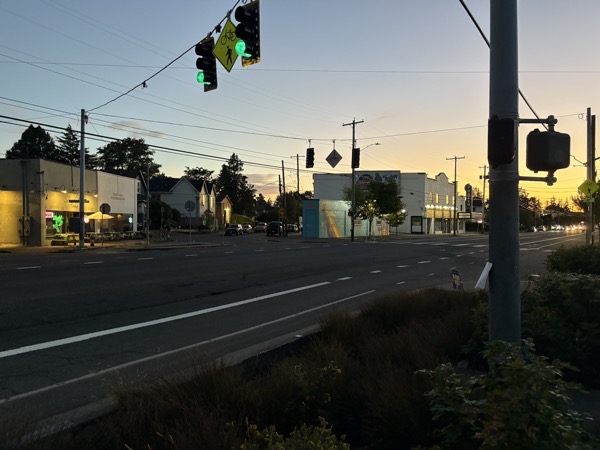
a beautiful sunset shot of a road in my neighborhood
a sunset shot of a particular intersection of a road in my neighborhood. There's a colorful former weed store in the center of the image across the street.
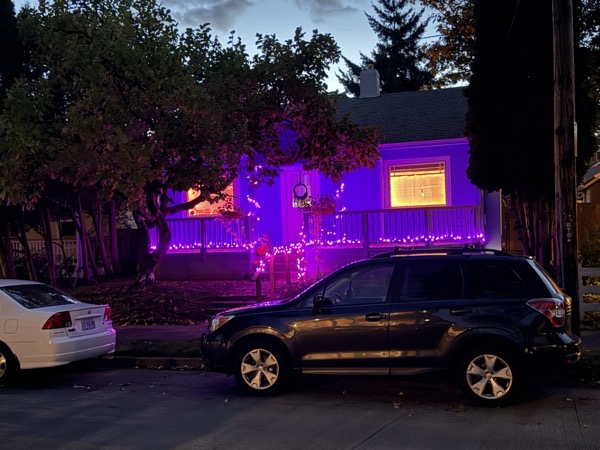
a home decorated for Halloween with fun exterior illumination
a neighborhood intersection where the street is painted with a rainbow
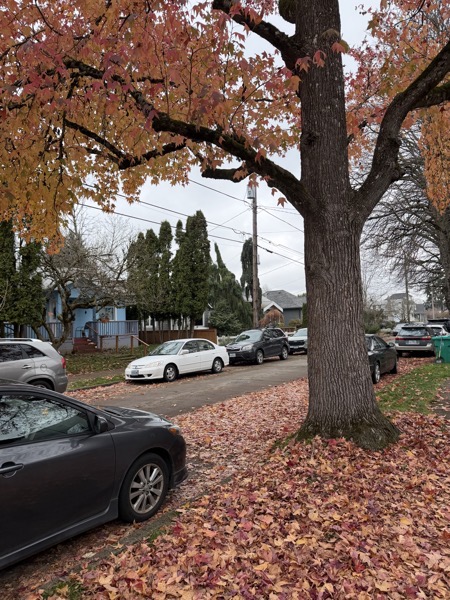
a late-fall scene in a nearby neighborhood
it’s always these little moments I cherish the most.

I also felt like I got to be really prolific in 2025 and that was really healing to me.

I did a lot of soul searching this summer too. I participated in a program designed by a good friend and former colleague who stepped away from a lucrative tech career to help people find their true calling. I’ve never necessarily seen myself as an entrepreneur type, but after spending a lot of time thinking about how I want to spend my life, it feels like an inevitability to me, and I am investing more heavily in finding the right calling for myself.

Going into 2025 I felt like I had been putting a lot of work into healing (from what, you ask? It’s a long series of stories), and 2025 got to show me that that healing work was bearing fruit. When faced with some serious challenges I took them in stride.


But I admit that in 2025 I’ve been running hot. My bullet points above don’t even capture the half of what I did in 2025, and I don’t want to try keeping such a frenetic pace.

My 2026 is going to look decidedly more chill.

Whereas 2025 was about making more, 2026 is going to be about doing fewer things. I will do plenty, but I’m going to be really selective about what makes the cut.

I’m going to focus on much smaller subset of things and really get into them more:

  • Enjoy the new kitchen/home remodel, hosting friends for some great meals and get togethers
  • Use the remodel as a ground-up fresh start in terms of home organization, and establish a few tweaks to sustainably keep things organized (and also share that journey as part of a 3Delights project I’m calling 3Drawers)
  • Bike at least 400 miles (that’s less than what I did this year but also I don’t think I’ll have several months of being unemployed)
  • I’m keeping retro game nights as a thing I do with my friend, but we’re going to play a bigger variety of games, and invite other friends into the fold

I’m keeping up with 3Delights, my side hustle. The thing I love about 3Delights is that it scales down beautifully and has only a handful of fixed monthly costs, so even if things are very slow with it I won’t feel pressure to shut it down (not unlike this blog 😏). If no one buys anything I won’t print anything, and people can literally order anything I make and I can make it on-demand, so I don’t have to worry about inventory (aside from supplies)

I like using 3Delights as an incubator to experiment with entrepreneurship. The skill I want to start building in 2026 is community building. I stop short of calling it “audience building” because I really hate that framing. An “audience” feels like a resource that you extract value from. I want to do something that feels truly mutual. I want to help people out by putting out useful and entertaining stuff, and I want to make cool things for friends to help them solve problems, and then share that with the world and help build a bigger following.

I’ve done small marketing experiments in the past, and my biggest conclusion was I don’t want to throw money at Big Tech on ad campaigns to try to drum up business; I want to make better connections with real people and help solve problems for them. That will take time but I want to approach it with more intentionality because I think it’s a long game for me. Generosity is a core value for me, but I want to try to see what generosity at scale looks like. Baby steps.

Even if the world is continuing to suck in a lot of ways, I am intent on having a wonderful 2026 and helping other people have a great 2026 with me. I cannot single-handedly solve the big issues the world is facing, but I can directly make other people’s lives better.

Goodbye, 2025. You’ll be a memorable year.


Dec 27 2025

The Kuycon G32P is the Pro Display XDR We Have At Home

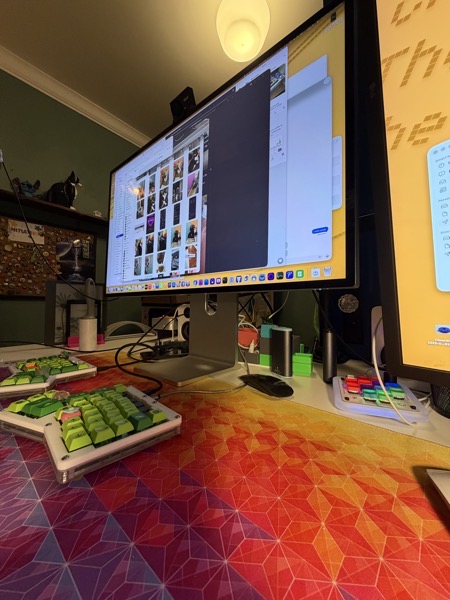
portrait of the Kuycon G32P on my desk
The Kuycon G32P in all its glory

2025 is the year display makers finally put out a bunch of 32″ 6K displays, and the best one is from a Chinese brand you probably have never heard of.

I figured Kuycon’s “We have the Pro Display XDR at home” would superficially look like a Pro Display XDR but otherwise feel like a cheap knockoff. I initially filed it away mentally, holding out for LG’s 32″ 6K display. I’ve been a loyal LG Ultrafine customer for almost a decade and I assumed the 6K display was the next logical choice.

But LG’s 6K display gave me the ick shortly after I had it set up.

Almost immediately, I could tell the matte plastic screen looked just awful. Contrast was way lower, colors weren’t quite right, and the diffuse pattern made looking at text blurry. LG’s great display panel produced a beautiful picture, and the rest of the display did its best to prevent me from enjoying it.

What’s worse, the display’s enclosure and stand are flimsy plastic. The Ultrafine 4K and 5K displays had a pretty basic black enclosure that wasn’t fancy but looked fine (you could even call it… Ultrafine 😎). The Ultrafine 6K wants to look like a high-end aluminum device, but it’s just plastic and plastic pretending to be metal never looks good. My 4K and 5K displays are plastic too, but they were at least honest in their design.

Also, my first impression of the LG was worse because mine was defective (it had non-working USB ports). But even if everything was working, I just wasn’t happy with the display.

So I was back at square one, and unfortunately, all the other options from reputable display makers also used matte screens (and they were all kind of ugly too).

So I checked out the Kuycon G32P’s reviews, and they were all pretty positive.

Its enclosure is aluminum and glass, and that glossy glass front gave me hope.

And the best part: this monitor is using the same LG panel all these monitors are using. LG’s panels are good and that gave me confidence the monitor would be fine.

Long story short, I love it, and it’s actually priced a little cheaper than LG’s display.

I do miss embedded stuff like speakers, mic and camera that I had in my Ultrafine 5K (the Ultrafine 6K dropped the mic and camera too though).

But the G32P is the real deal.

It looks absolutely beautiful, both as a piece of kit, and the picture quality is great too with the glass front. There’s a tiny bit of a grain pattern that isn’t present on my Ultrafine 5K, but it’s only visible at certain angles and I suspect is related to the antiglare finish on the glass.

The display wakes up just as fast as the Ultrafine 5K it sits next to (weirdly the Ultrafine 6K took longer to wake up from sleep).

Colors look great out of the box. They’re bright and saturated looking and to my eye it’s got excellent color accuracy.

One thing you don’t get with this display is a high refresh rate. This display is 60Hz, which is on par with other displays of this size and resolution, and I’m actually not sure if it’s possible yet to drive this many pixels at 120Hz quite yet with the latest Thunderbolt. I love having a 120Hz display on my iPhone, but for my computers, I’m happy to compromise ultra-smooth motion for more real estate any day.

I’m a few weeks in and it feels like an appliance. When not in use it looks great at my desk, and when it is in use it fades into the background as I focus on the screen content.

## Why 32″ 6K?

Long story short, I love displays with a ton of screen real estate.

Having a bigger monitor literally makes your more productive ([seriously](https://www.nngroup.com/articles/productivity-and-screen-size)). Nothing beats being on a screen with tons of real estate. When I have to work on my laptop screen doing a task that involves multiple apps I just feel cramped.

And you can’t just pick the screen with largest diagonal size and call it a day. I see lots of big 27″ and even 30″ displays (and sometimes ultrawide displays) that are still just 4K resolution, or some big 38 to 40 inch displays that are 5K resolution. When you make the screen bigger but don’t add more resolution, you’re getting bigger pixels and you lose crispness.

I read text for a living, and it makes a big difference to have a monitor with pixel density on par with printed paper.

Parting Thoughts: 👍️

At about $1800-1900 shipped, this monitor in the middle of the price range. You can get an Asus display at this size and resolution for about $1300. LG’s is $2k, Dell’s Ultrasharp 6K is over $2k (but there are often sales). You could go high end and get Apple’s Pro Display XDR if you are willing to drop $6k. In fairness, the Apple display has some pro-level color fidelity and brightness levels, but for me that display was overkill and I didn’t buy one to complement my Mac Pro back in 2019. I just wanted a nice display that’s big.

Kuycon isn’t a brand new company; they’ve been around for a little over a decade, but I think they’re new to selling in the US.

It felt like a riskier buy, spending $1800 on a relatively unknown brand (in fact, my credit card company flagged the transaction as potential fraud on the first try), but I’m glad I did. And you can even buy this display on Amazon now for the same price, which might assuage some anxieties.

The G32P gets my hearty endorsement, and I’m rooting for Kuycon. I like mine enough that I’m severely tempted to get a second on in 2026.


Nov 16 2025

The Volkswagen ID. Buzz

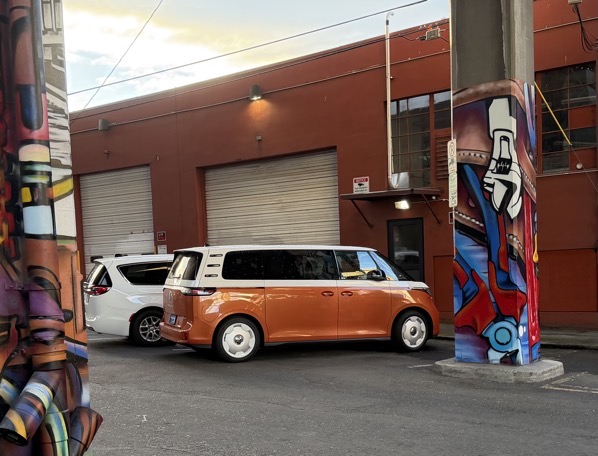
my ID. Buzz parked on the east side of Portland under a bridge
Cars are in a rough place right now, especially EVs.

The ID. Buzz is a touch of whimsy in a sea of cars that are getting more homogenous and less colorful.

the meme of John Daly dressed in flamboyant pants and a colorful shirt looking at Tiger Woods dressed in more formal golf clothes, with the label "Me in an ID. Buzz" applied to John Daly, and "The Cybertruck I'm passing by" applied to Tiger Woods

When you see one on the road, it’s the opposite of seeing a Cybertruck. It’s bright and friendly looking. It comes in fun colors. And although it’s big, it’s got passenger and cargo space for days.

When I went to see one in person, it surprised me. None of the things I expected would annoy me about it were that bad, but the first time I went to look I left the lot without test driving one because it was just so massive.

I decided to look at it again a couple days later and actually take one for a spin, and I fell in love with it.
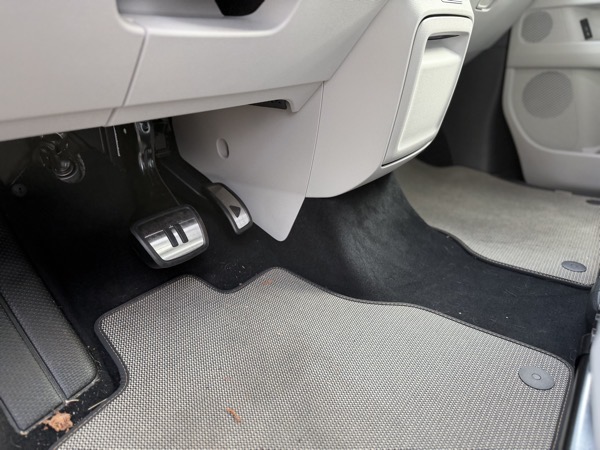
the brake and accelerator pedals in the ID. Buzz have pause and play icons on them

You notice it from when you first step in and see the pause and play icons on the brake and accelerator pedals. You sit down in the driver’s seat the captain style seats are really comfortable. I really like the more upright position the seats have, and I can’t wait to take a long road trip in this.
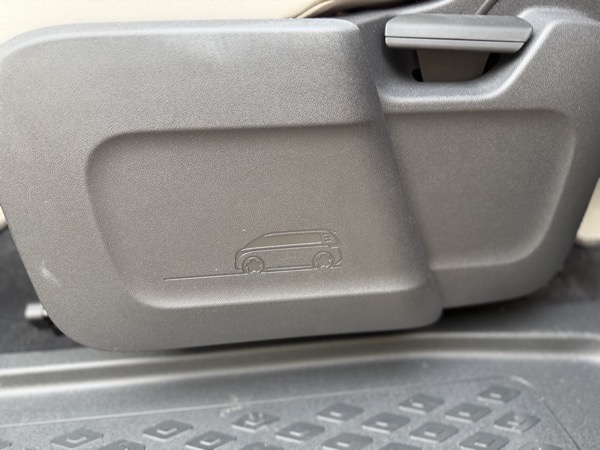
one of many fun little easter eggs throughout the ID. Buzz

Looking out the windshield is super cool. The angular shape of the windshield makes it feel like you’re looking out at a panoramic view of the road. I can’t explain it but it was kind of surreal when I was first driving it.

The "buzz box", a removable center console

It’s so full of thoughtful storage and accessories as well. There are USB-C ports all over the car, and there are shelves and compartments aplenty. When you fold down the seats you end up with a massive amount of cargo space (apparently more than a Chevy Suburban, despite the ID. Buzz being a bit smaller).

This car wants to go on a long road trip and it’ll be enjoyable every step of the way.

Driving It
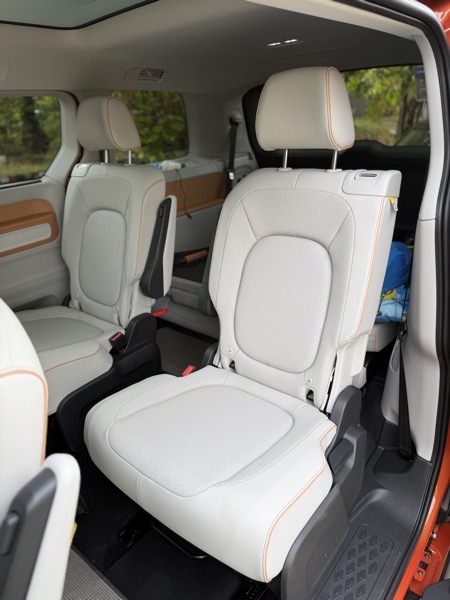
view of the driver's seat

As I have mentioned in other accidental car reviews, driving an EV is… persuasive. I’ve heard computer nerds liken it to switching from a spinning disk hard drive to an SSD, and that feels like an apt comparison.

When you get on an onramp, you can just step on the gas and acceleration doesn’t feel like a problem at all (and this is impressive for a car of this size). No shifting to worry about, just torque as you need it. On paper the ID. Buzz’s acceleration sounds unimpressive (taking 7.4 seconds to go from 0–60), but because you’re not waiting on gear shifts, it’s a non-issue. Also, if you find yourself wanting to pass someone quick on the highway, you can step on the accelerator and the electric drivetrain happily obliges instantly.

Being in an EV comes with other fun features. There’s no engine to start, so you just get in and start it by hitting the brake pedal. There’s a regenerative braking mode that lets you do single-pedal driving because letting off the accelerator engages regenerative braking. That’s a huge quality of life improvement if you’re driving on even a slightly busy street. And one of my favorite features on cold mornings: the ability to remotely turn on climate control, even on a schedule (even though I continue to think the interface for scheduling climate control sucks on these cars).

Driver assistance features are generous. The adaptive cruise control and traffic jam assist feel considerably more natural in stop and go traffic than on the 2020 Audi Q5 I’m coming from. The auto parking feature is kind of delightful; it can literally pull into a parallel parking spot for you. One of my favorite little quality of life improvements is the brake hold feature, where you can press harder on the brake when you stop at a stop light, and it will lock in place so you don’t have to hold it down with your foot while waiting for green.

The Annoyances

Things I thought would annoy me about the ID. Buzz:

  • The capacitive buttons everywhere, especially the steering wheel. In practice, I’m not bothered by them as much as I thought I’d be. I’d much rather get knobs back for volume controls though.
  • Touch controls for the climate control. Yes, it is annoying, but I can deal.
  • Stepping down a luxury level from Audi to VW. This turned out to not be a concern; the fit and finish is comparable to a Q5 (good thing, too; the Buzz is pricier).
  • Relatively unimpressive acceleration numbers (they look bad on paper but believe me, the Buzz doesn’t feel slow)

Things that do annoy me about the ID. Buzz:

  • The turn signal stalk that has to double as my high beam controls and also the front and rear wiper controls. This is like the world’s worst Bop-It. They could have had a second stalk or something. I do, however, like that the side button on this stalk is dual purpose. You press it and it runs the wipers once, you hard press it and it sprays the front windshield.
  • I miss the cruise control stalk from my Audi; once you learned it, it was a much more intuitive way to use cruise control.
  • The footprint of the car takes a lot of getting used to coming from a midsize SUV. Getting out of my driveway remains a 5 point turn and the emergency brake thing will sometimes activate as I’m backing up toward the shrubbery (seriously annoying).
  • The way the seats and windshield are positioned, if I’m the first car at a stop light I have to crouch down to see the lights.
  • Right now the infotainment system is crashing multiple times a week, which is multiple times per week more often than I consider it acceptable for in-car software to have a rebooting-level crash.
  • The key fob’s button layout makes no sense (you absolutely have to take it out of your pocket to use it), and the car unlocks on its own when I’m near it. It’s a little unsettling to be at home and get a push notification that your car doors just unlocked.
  • The little button to pop open the back hatch requires you to hold it for some reason.
  • When I put the vehicle in reverse the volume gets lowered way too low and I can’t hear what’s being said in the podcast I’m listening to and I have to go back.

Software

I mentioned in my Q4 review that Audi’s infotainment software was trash. VW’s is somewhat better, but it’s been super crashy for me. I’ve had multiple hard crashes of my infotainment system this week. The acceptable number of software crashes in cars is zero. The infotainment system absolutely should not crash, and my upper bound for it is one crash a year. I’ve been getting a crash per week lately and I may need to reach out to VW for assistance.

But although both VW and Audi are building on top of Android Automotive, I feel like VW’s got more whimsy in their infotainment system. As I cross mileage milestones it’ll notify me. There are fun seasonal decorations on the home screen too, and user profiles have your picture on them.

And my favorite little delightful feature? My VW iPhone app lets me customize the home screen icon, so my app icon gets to be an orange ID. Buzz. Just perfect! (now, the mobile app itself could use some serious TLC, but overall I’m not mad!)

VW is in a strategic deal with Rivian and as part of that deal they get access to Rivian software. I’m interested in seeing that bear fruit a few years down the road because I believe that’s an area where Rivian is quite strong.

Cost

The top negative reaction to the ID. Buzz right now is a mixture of sticker shock at the price, and a complaint about the range not being adequate. And I hate that take, because it’s literally saying “It’s too expensive, and its most expensive component isn’t expensive enough!”

EVs in the US cost too much right now, largely because automakers have decided they’re only making big EVs in the US.

And when you make an EV bigger, you are firmly committing to a higher price because a big car needs a big battery, and batteries are the most expensive part of an EV.

At a typical MSRP of over $70k, the ID. Buzz comes out looking like the most expensive minivan.

But I wasn’t shopping the ID. Buzz against a Sienna or any other minivan.

The ID. Buzz is shaped like a minivan, but it’s its own thing entirely. It’s modeled after an iconic vehicle. It’s the form factor of a minivan, but it’s cool and eccentric.

For what it’s worth, I’m happy with the price (I took advantage of both the $7500 tax credit and a price reduction of a few thousand on top of that). Well, maybe “happy” is a bit of a stretch.

But the features and the fit and finish of the interior feel appropriate for what I spent (and I’m coming from an Audi Q5 Prestige for reference). Even if VW had sprung for making a more affordable $50k trim level in the US I bet they’d be moving a lot more, and my bougie ass would have still piled on options because I’m high maintenance like that.

Range

When you charge to 80% (which is the recommended default) you get a little over 200 miles of range. Charging to 100% gets you a little over 250 miles.

The ID. Buzz gets grilled a lot over range and I think it’s unjustly maligned.

For perspective, suppose VW released a cool gas powered car and for some reason its tank only provided 250 miles of range. If the car is otherwise the one you want, would a 250 mile gas tank deter you? After all, you can always find a gas station.

But when an EV has the same range, it’s considered a problem.

But it’s not really the range we’re worried about; we’re anxious about the availability of places to charge.

In an alternate universe where literally every single place you stopped had a high speed charger, 250 miles of range isn’t even a worry. In the time it takes to eat a quick lunch or stop to look at a quirky roadside attraction you could add 200 miles of range. If you are making a stop every 3 hours or so to check out something, you’re keeping the car topped off.

A road trip with an EV is totally possible; it just needs planning. It’s possible to spontaneously hop in the car and go somewhere knowing there are charging options, and longer road trips are perfectly doable too.

And EV charging in the US is a developing story, too. In a few years there will surely be thousands more places I can charge my ID. Buzz than there were the day I bought it.

Another important point: I’m not doing multiple 1000+ mile road trips each month (and if that’s your driving lifestyle, you should absolutely think twice about an EV). My day to day driving doesn’t come close to touching the battery’s full capacity, and even if I did a longer drive, like going to the Seattle area, I’d fast charge once when I’m out there and I’d be fine.

I charge at home about once a week (and I usually have over 50 miles of range left when I do so). If I didn’t have a charger at home I could charge at places like Costco or near the gym or some grocery stores.

250 miles of range is only going to really affect me when I take a long road trip. And even then, it will just mean I need to plan for more frequent stops, and the stops will be longer. And even so, I am very excited for road trips in this thing!


Closing Thoughts

Automakers in the US need to be making smaller and cheaper EVs. I want VW to make the ID. Bug. VW could price an entry-level model at $30k and give it 200 miles of range, with nicer trims that bring that range up to 300 miles. And it’s an iconic design. It would sell very nicely, and VW could do interesting things with it like make an AWD version. VW should absolutely bring back the eGolf too and give it decent range. They could even make a sporty version with AWD and insane acceleration and range.

It’s a weird time to be buying an EV in the US. The federal government is doing everything it can to hold EVs back for some dumb reason. Affordable EVs are perpetually a couple years away, and the expensive battery packs force automakers to cut costs elsewhere in the car (often one of the reasons you keep seeing real buttons disappearing from cars in favor of touch controls and screens).

Charging infrastructure in the US is still developing. Tesla’s is the most mature but many cars can’t use their network (though this is changing). Electrify America’s charging network is much more sparse and they have a reputation for not taking good care of their charging spots (though anecdotally I hear this has been getting better).

But you get behind the wheel of an EV, and you can’t help but be moved. They are an absolute delight to drive and they unquestionably feel like the future.

For me, the ID. Buzz is a reminder that I love whimsy in my cars, and I will accept nothing less anymore. I don’t think VW is setting sales records with the Buzz (in fact, they recently paused production for a few days because there are too many Buzzes waiting to be purchased), but I hope that they are inspired to make more eccentric, opinionated electric vehicles.

And I’m really encouraged that nobody is mad at the ID. Buzz’s eccentric and opinionated looks; in fact, people seem to love the way it looks. People are balking at its price, not its aesthetic. So I hope that VW learns the right lessons from the first generation of the Buzz.



Jun 25 2025

The Future Doesn’t Have To Suck

Tech leaders are trotting out the “We’ll use AI to reduce headcount in the next 2 years” talking point again.

I’ve been hearing this talking point for at least two years now. It’s always just a couple years off. It’s not backed by the actual ability for AI to do that, of course, but it sounds good to investors and it’s a good way to shut up those pesky workers with their demands for better treatment.

We think AIs are transformative because they can do things we’ve never seen a computer do before, but they have the giant catch that you can’t really rely on their output to be correct and deterministic the way you could with simpler computer algorithms. They’re just another piece of new tech delivering incremental improvement with tradeoffs.

I’m not suggesting AI tools have made no improvements recently. But we’re collectively pouring massive capital into evolving these models and we’re getting diminishing returns. We’re not going to get to a point where they “just work.” It’s literally not what they’re designed to be able to do, and new features like agent modes and MCP servers are still papering over that really important detail that LLMs are still just generating statistically plausible output given a particular input, without regard for understanding what’s underneath.

But suppose for the sake of a hypothetical that I’m wrong.

Let’s assume AIs actually are about to become so accurate that you can feed them a prompt and they’ll just produces the output exactly as you expect, every time.

It doesn’t have to play out like some dystopian scenario where everyone gets fired and the world falls apart.

Fully Automated Luxury Gay Space Communism Utopia

Picture it: the AI that just works has landed.

While all the biggest companies try to one-up each other on who can fire as many people as possible while doing as little as possible for their customers with the new tech, the rest of us get to work creating a better world.

Instead of just using the AI to fire staff and rake in more profits, we could provide substantially better products and service for customers.

The bugs that used to lay neglected for years in the icebox get fixed because the AI helps fix bugs almost as fast as you can report them. Those feature requests that a vocal minority of customers clamored for but never got? We can implement them now and those customers rejoice. Eventually the backlog is empty. When a customer reports a bug or requests a feature they might see something ship in a week or two.

Getting support is a breeze. The AI-powered chatbot actually is helpful, and there are plenty of humans left over so that when there is something the AI can’t handle, they can step right in and help. And they’ll do an even better job because we’ll have good internal tools for those humans to use.

And while we’re at it, we switch to a four day work week, and work fewer hours a day. The AI is helping out so much that it’s stupid not to reduce hours. People are less stressed. They stay in jobs longer. They take longer vacations.

And because it’s so easy to spin up a new business now, even starting out solo, a lot more people do just that, and Big Tech’s stranglehold on the world gets chipped away at from every angle. Big Tech doesn’t just get outmaneuvered by more agile companies, they’re getting out-executed too. Most of the structural advantages you had as a big company vanished.


I’m so sick of the same uncreative takes from people who seem to be getting off to the idea that we are on an inevitable path to dystopia.

Again, AI is not going to get that good. But if we did, we could make something better than a dystopia.

And frankly, we could use the tools we have now to work toward making something better than a dystopia.